Role
Designer
Researcher
Duration
~2 Months
(Part-Time)
Tools
TL;DR
The problem: social event coordination creates friction at the point of initiation, not just logistics
Research across ~8 conversations and 3 competitor apps uncovered emotional barriers, not just technical ones
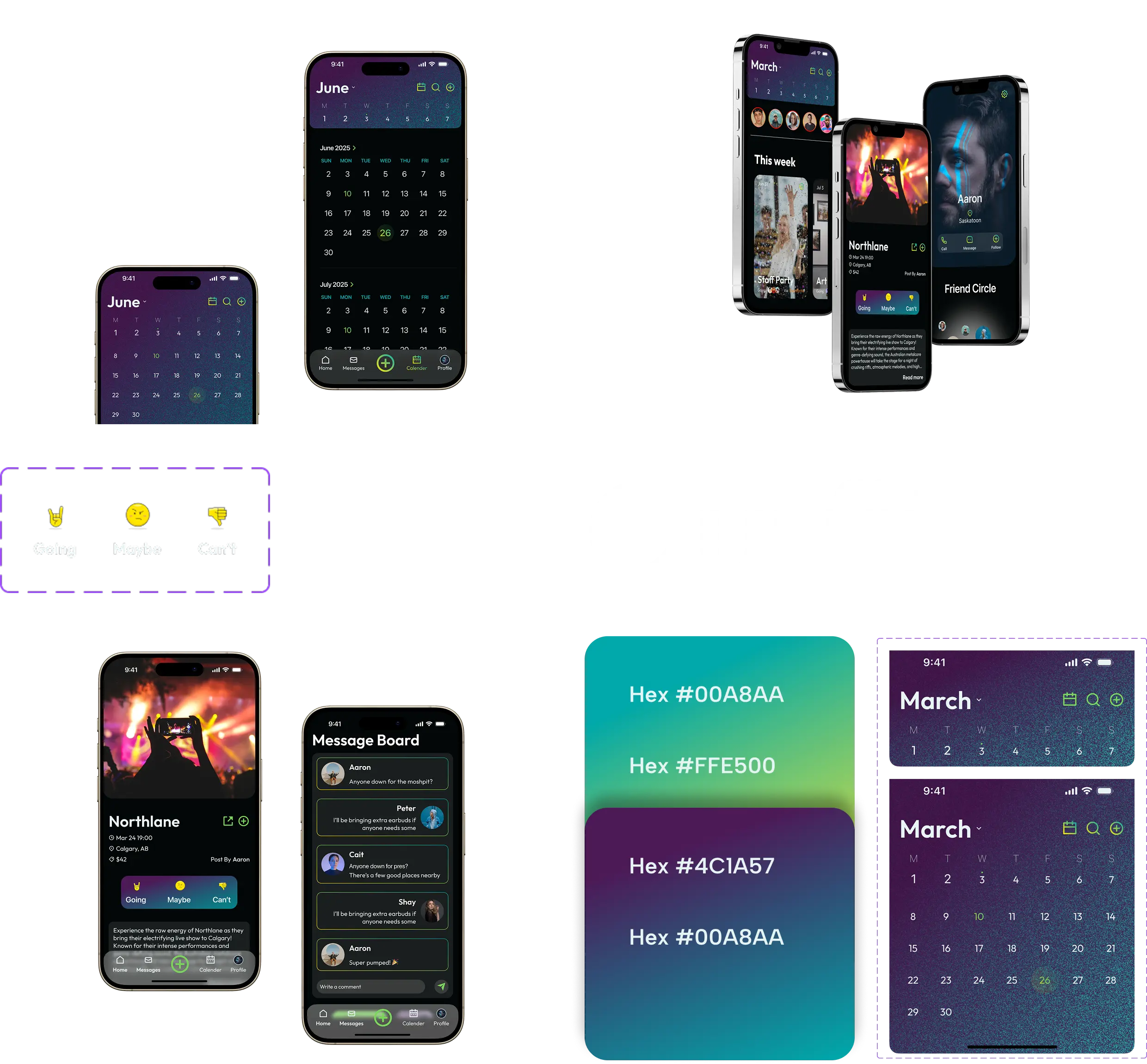
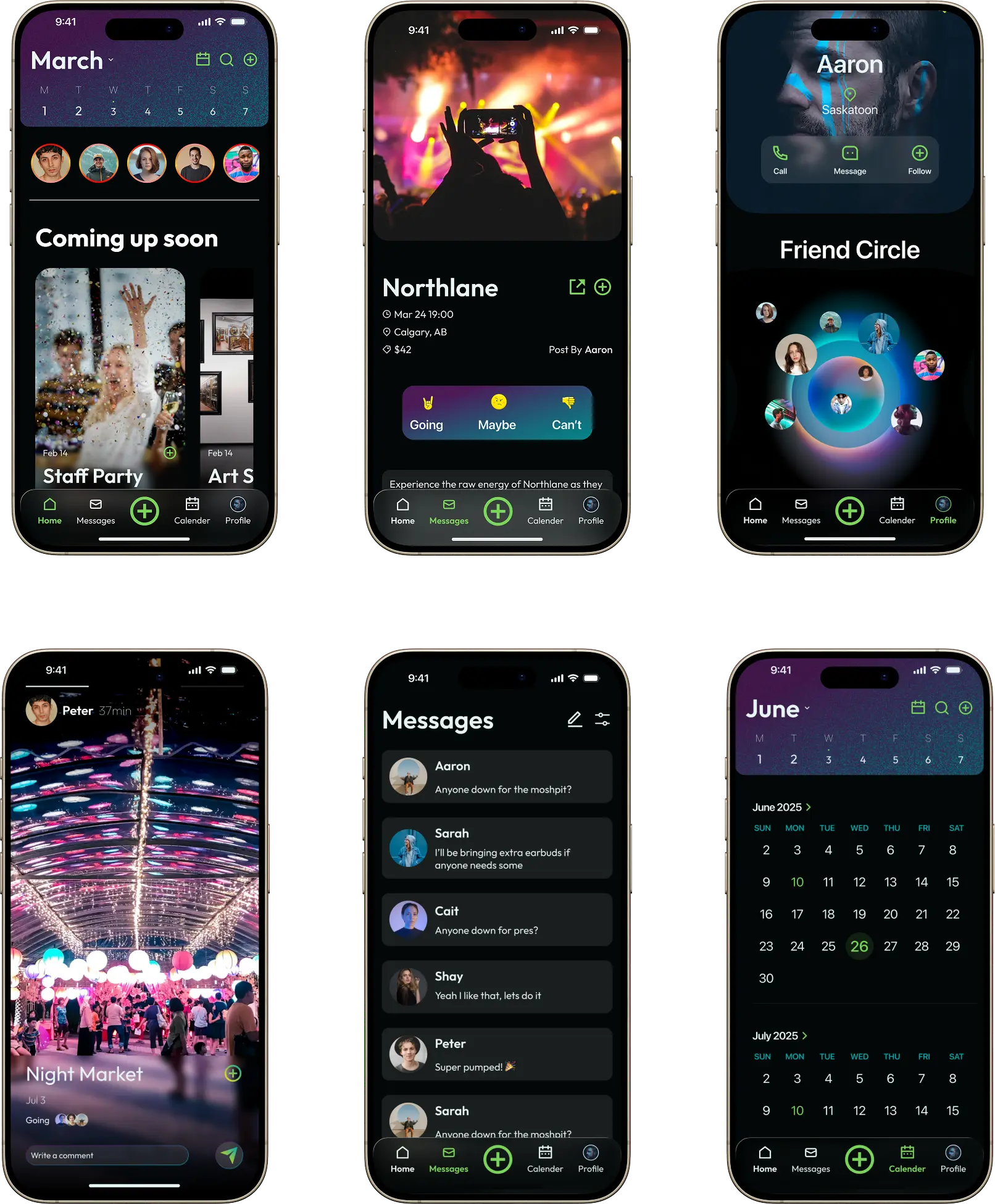
Designed a private, circle-based event app with auto-import, live activity notifications, event voting, and a per-event message board
Informal testing showed positive response to the concept and visuals — a refined prototype will be shared for structured feedback before development
iOS prototype planned for later this year
The Problem
Why is it so hard to just make plans?
As we get older, keeping up with the people we care about gets harder, not because we care less, but because life gets more fragmented. Everyone’s on a different platform, at a different point in life, working different hours. Suggest something in a group chat and it disappears in twenty minutes. Share an event link and half the group isn’t on that app. The friction isn’t just logistical, it’s that coordinating across contexts takes enough effort that people quietly stop trying.
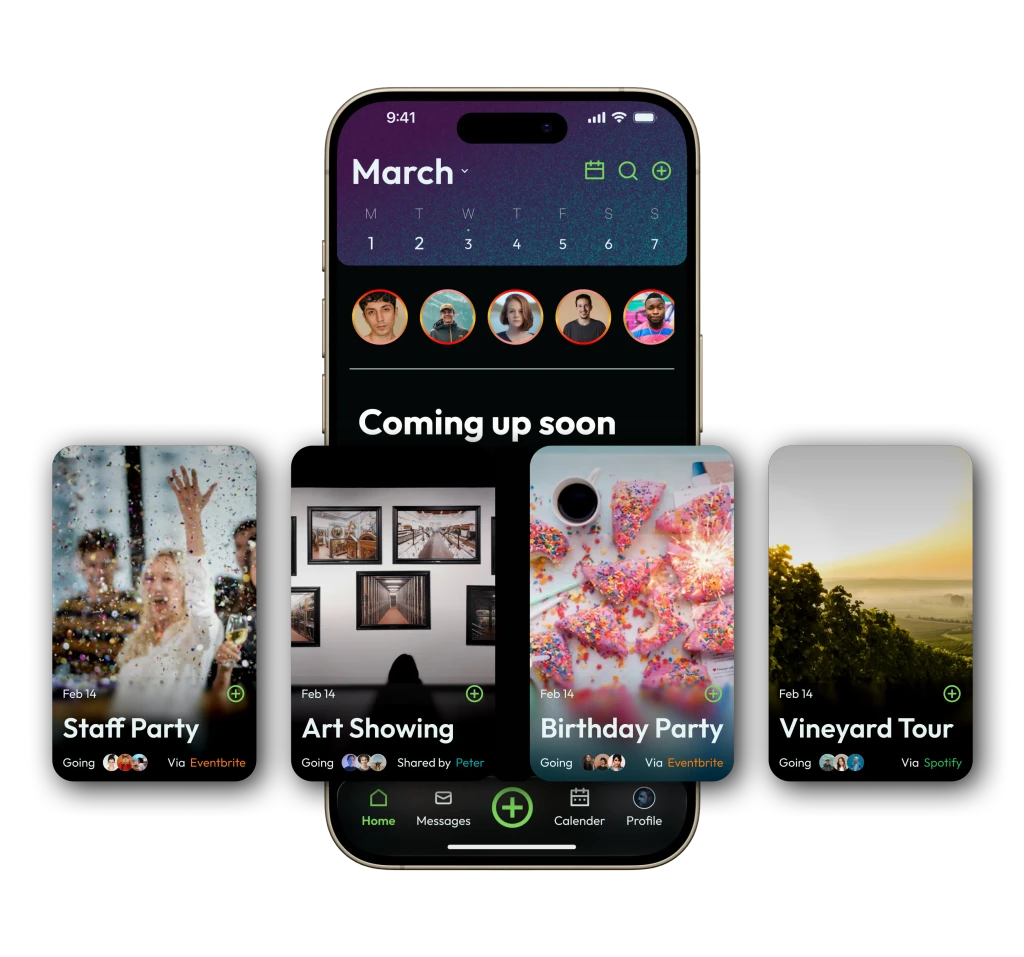
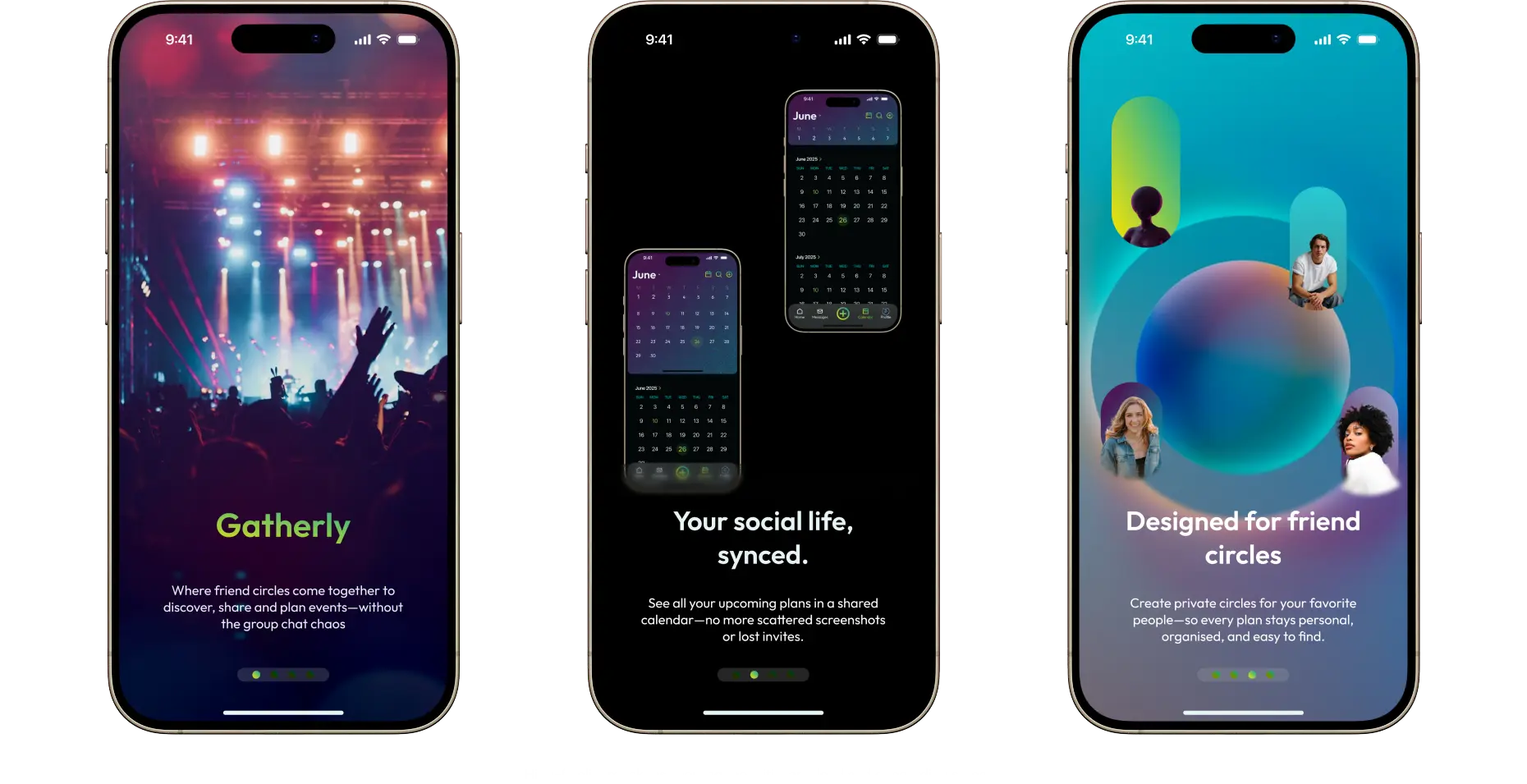
Gatherly started as a simple idea: a shared space where friends could drop events they'd actually want to do together: concerts from Spotify, shows from Ticketmaster, local nights from Eventbrite. No chasing information across five different places.
Less a social network, more a shared calendar with your people.
Research
The tools exist. The problem is they weren’t built for this.
I spoke with ~ 8 people across different ages, social habits, and comfort levels with tech, and walked through the experience myself on Partiful, Apple Invites, and Facebook Events.
What came back wasn’t surprising, but it was useful. The logistics complaints were consistent, too many platforms, incomplete event information, no single place to see what’s happening. But the thing underneath all of it was more interesting: people felt awkward being the one to initiate, especially across mixed groups. Colleagues need a different approach than close friends. Outdoor people aren’t the same crowd as your concert crew. One flat group chat or one flat event feed flattens all of that in a way that creates its own friction.
Partiful got close. Anyone could join without an account, which solved a real problem. But it still had limitations for a one-and-done occasion. The question Gatherly is trying to answer is: what if you could open that up to named circles each with its own context, its own vibe, its own people?
"I don’t have Facebook, but half my colleagues still use it for events. Every time we tried to plan something after work I was either out of the loop or somebody had to manually re-share everything."
That’s not an edge case. That’s just what coordinating across different generations and departments actually looks like.
1. Pasting a link should be enough
Creating an event from scratch is a commitment. A blank form before you know if anyone’s interested is exactly the kind of friction that stops people before they start. Auto-importing from Ticketmaster, Eventbrite, or Spotify Concerts means the event arrives already complete a name, a date, a photo, a ticket link.
You’re sharing something that already exists, not building a case for it.
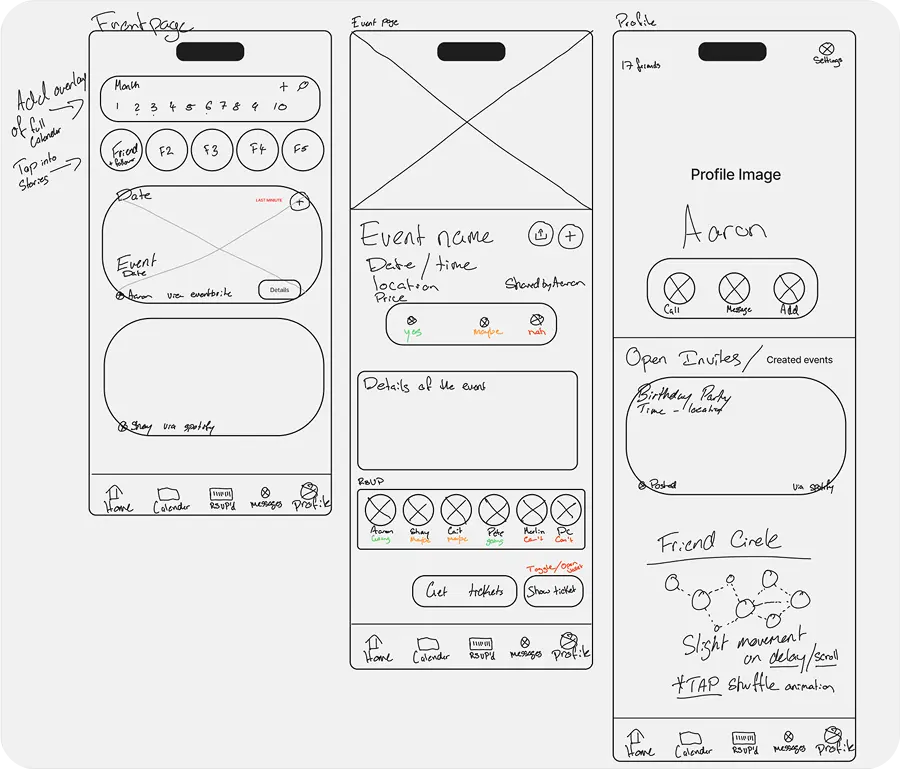
Early sketches for Home, Create Event, and Profile screens
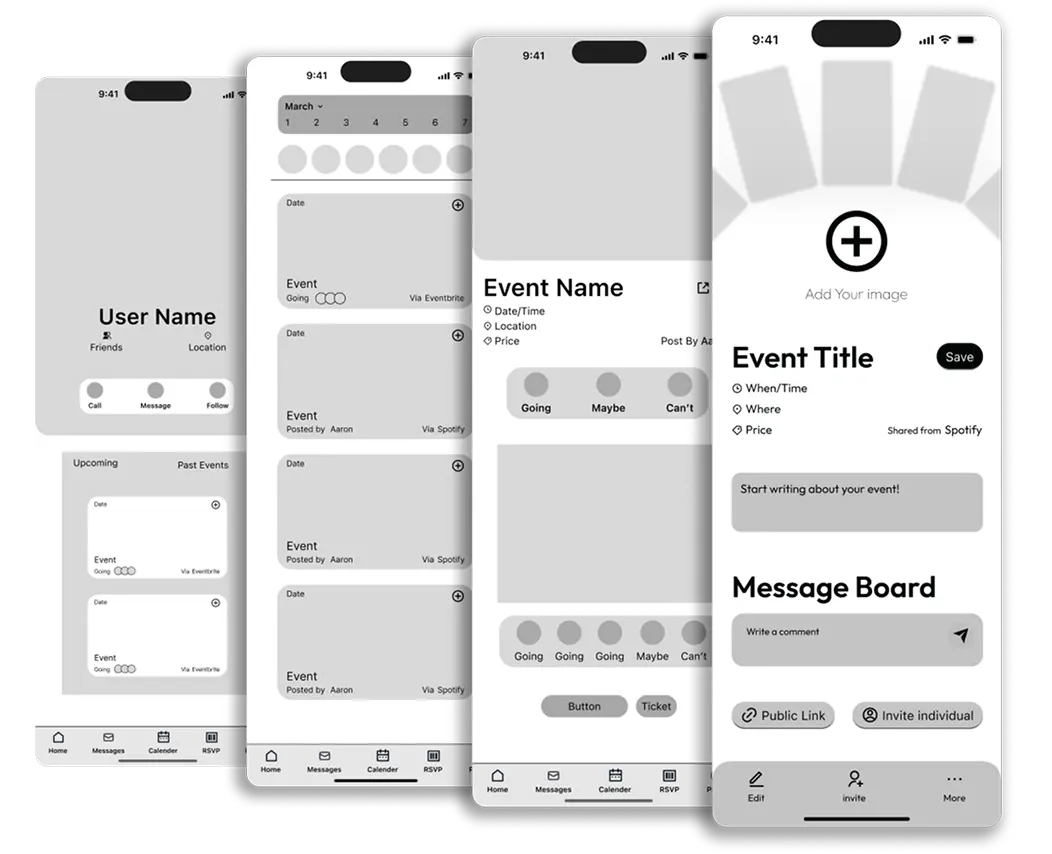
Low fidelity wireframes created from early sketches for pre-testing
2. People won’t commit to what they don’t understand
One pattern from research: people would see an event in a group chat, feel uncertain about the details, and quietly say nothing. Uncertainty creates drop-off before anyone RSVPs.
Gatherly tackles this on two fronts.
Event source tags link directly back to the original listing: venue, tickets, and details one tap away. Every event has a voting system (Going / Maybe / Can’t) alongside a message board for questions, extra context, and general vibe checks so the conversation about an event lives with the event itself, not buried three days back in a group chat.
3. Stay in the loop without checking in
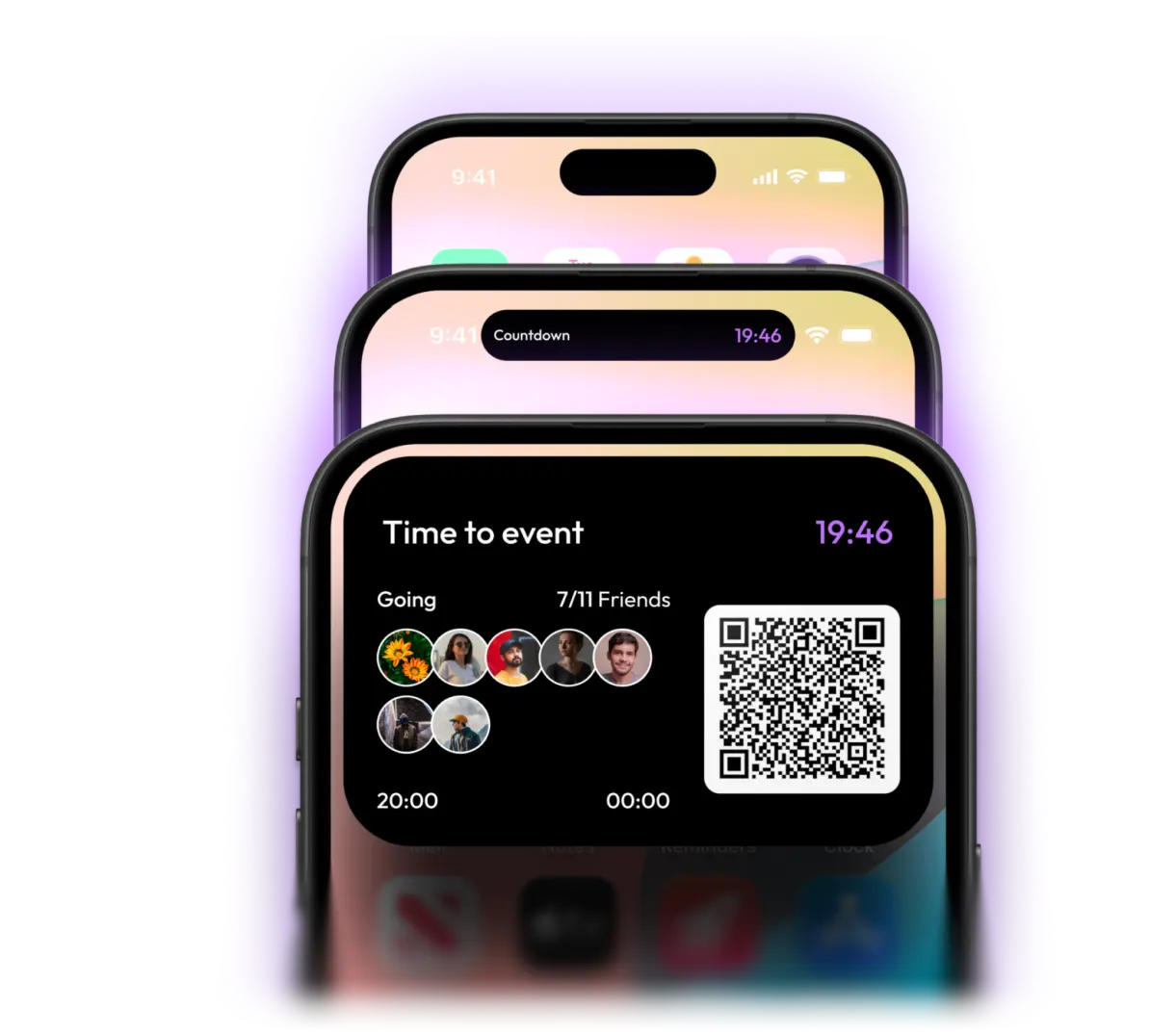
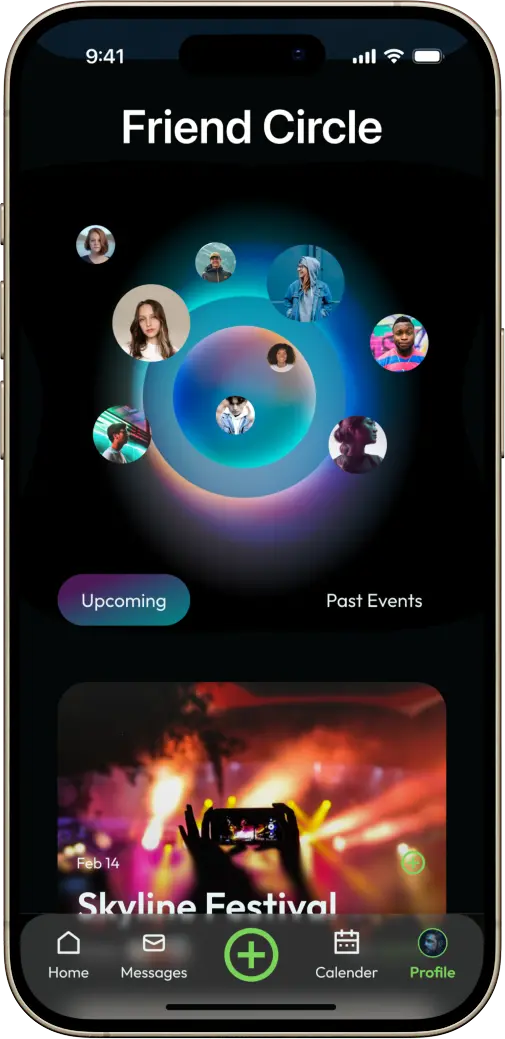
4. Your concert crew isn’t your work crew
Early conversations made something clear: people don’t have one social group, they have several, and those groups have completely different communication norms and expectations. A single flat friend feed doesn’t reflect how people actually socialise.
The next phase of Gatherly introduces named Friend Circles, small, private groups where the right events reach the right people without awkward crossover.
Circle creation will also include optional visual theming, dark and saturated for nightlife, clean and airy for outdoor activities, warm neutrals for work groups so the app matches the energy of the plan.
Validation
What early testing told us
I put together a study to test core flows but wasn’t able to get participants at that stage. Informal showings of the concept and visuals to friends and colleagues got a genuinely positive response — people immediately recognised the problem and liked the direction. The consistent feedback was that the idea landed, but the designs needed more polish before being shared with a wider design audience for structured critique.

The App
Reflection
The real barrier was never the app
The bigger question I want to test with real users
Will making it easier to go first actually change how people make plans, or will the group chat always win?